Every commercial kitchen has to deal with grease buildup in hoods due to the nature of commercial cooking. To maintain a compliant kitchen, it’s essential to understand why grease builds up in kitchen hoods and how quickly it can become a risk if left unaddressed. Below is a clear, direct breakdown of the most common causes of grease buildup in kitchen hoods.
The primary cause of kitchen hood grease buildup is the type of cooking being performed. Frying, griddling, sautéing and charbroiling all produce grease-laden vapors. Cooking with wood and charcoal is especially aggressive, as these methods release heavier particulates and grease, leading to faster accumulation and more frequent required cleanings.
Another primary reason for commercial kitchen grease buildup is failing to meet required cleaning frequencies set forth by the National Fire Protection Association (NFPA). The NFPA 96 provides standards for ventilation control and fire protection in commercial kitchens, and the cleaning schedules are not optional or customizable. If you delay or skip cleanings, grease accumulates layer by layer in areas not visible from the kitchen floor.
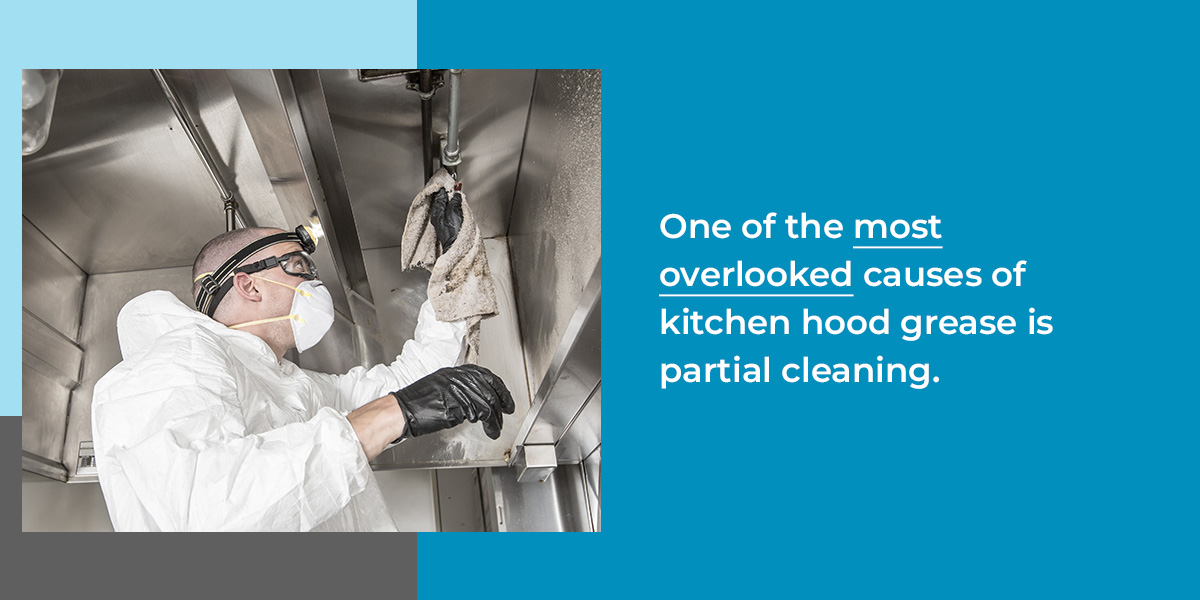
One of the most overlooked causes of kitchen hood grease is partial cleaning. Grease accumulation extends beyond the hood into the:
Grease filters capture grease before it enters the duct system. However, when filters become saturated, grease bypasses them and migrates deeper into the exhaust system. Frequently cleaning and replacing filters when necessary can reduce grease buildup.
Kitchens that operate long hours or serve high volumes of food naturally generate more grease. Even if you follow the required cleaning schedules, high-volume operations tend to accumulate grease faster due to constant use. In these situations, kitchens must increase cleaning frequency to stay ahead of grease buildup.
Understanding the reasons for commercial kitchen grease buildup is critical, as it is a regulatory and fire-safety concern. The NFPA and other regulatory bodies require all commercial kitchens to follow their kitchen cleaning standards. Ignoring grease build up can result in failed inspections, fines and damage to your business’s reputation.
Grease buildup is also a fire risk, as grease is highly flammable. Thorough, code-driven cleaning can prevent fires. Additionally, regular cleaning can extend the life of kitchen equipment and reduce costly repairs.
If you operate a commercial kitchen and need assistance with grease buildup, ExhaustCLEAN provides professional, regulation-driven kitchen hood cleaning throughout North Carolina. We are NFPA 96-compliant and have extensive experience with commercial kitchen exhaust systems.
To discuss your facility or the service required, contact our team today. We can provide a free ExposureAUDIT that reveals the condition of your exhaust system.
